The Secret Coves Route
The ultimate Cap de Creus crossing
From Cadaqués to the edge of the peninsula · Exclusive nautical itinerary
A journey along the wildest coastline in the Mediterranean, where slate cliffs hide inaccessible coves and the sea reveals sunken treasures. Only reachable by boat, this itinerary is every sailor’s dream.
1. Departure from Cadaqués: The white pearl bids farewell
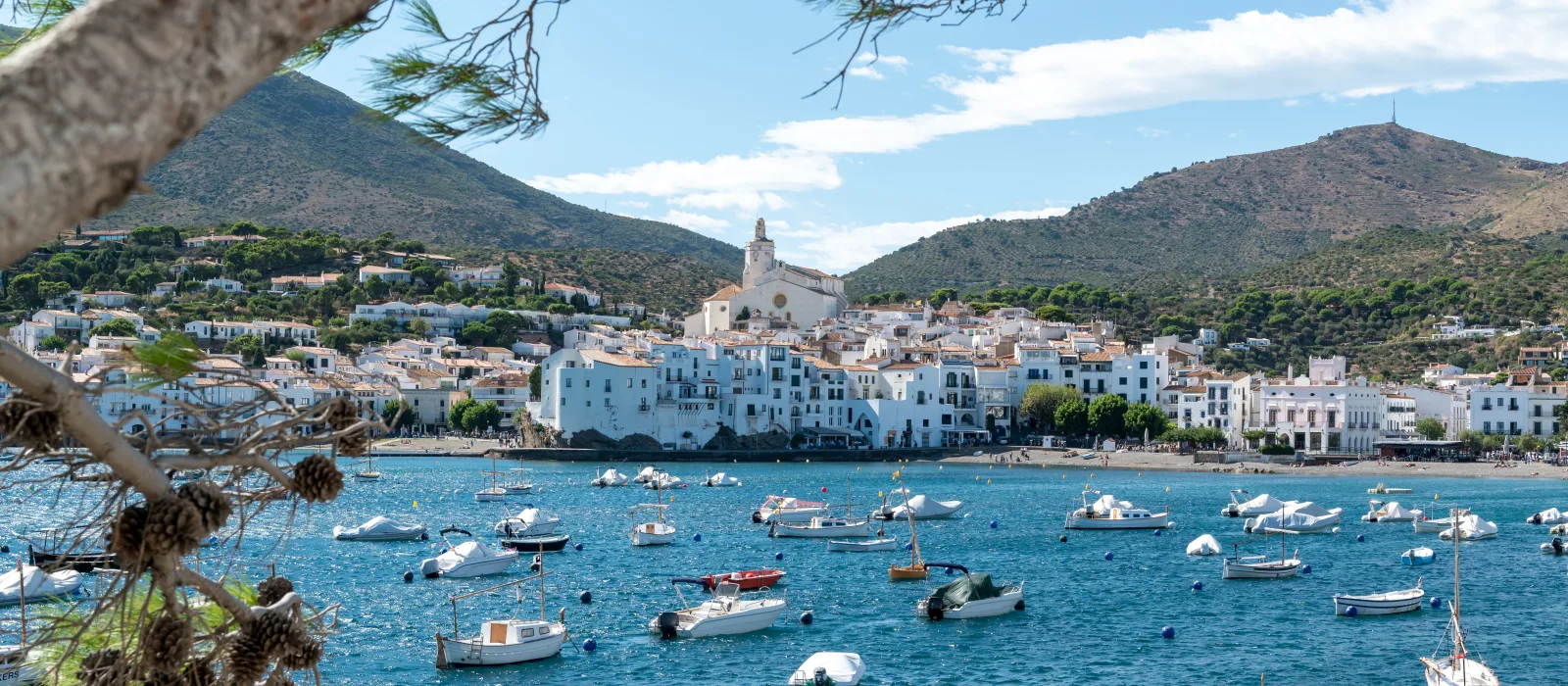
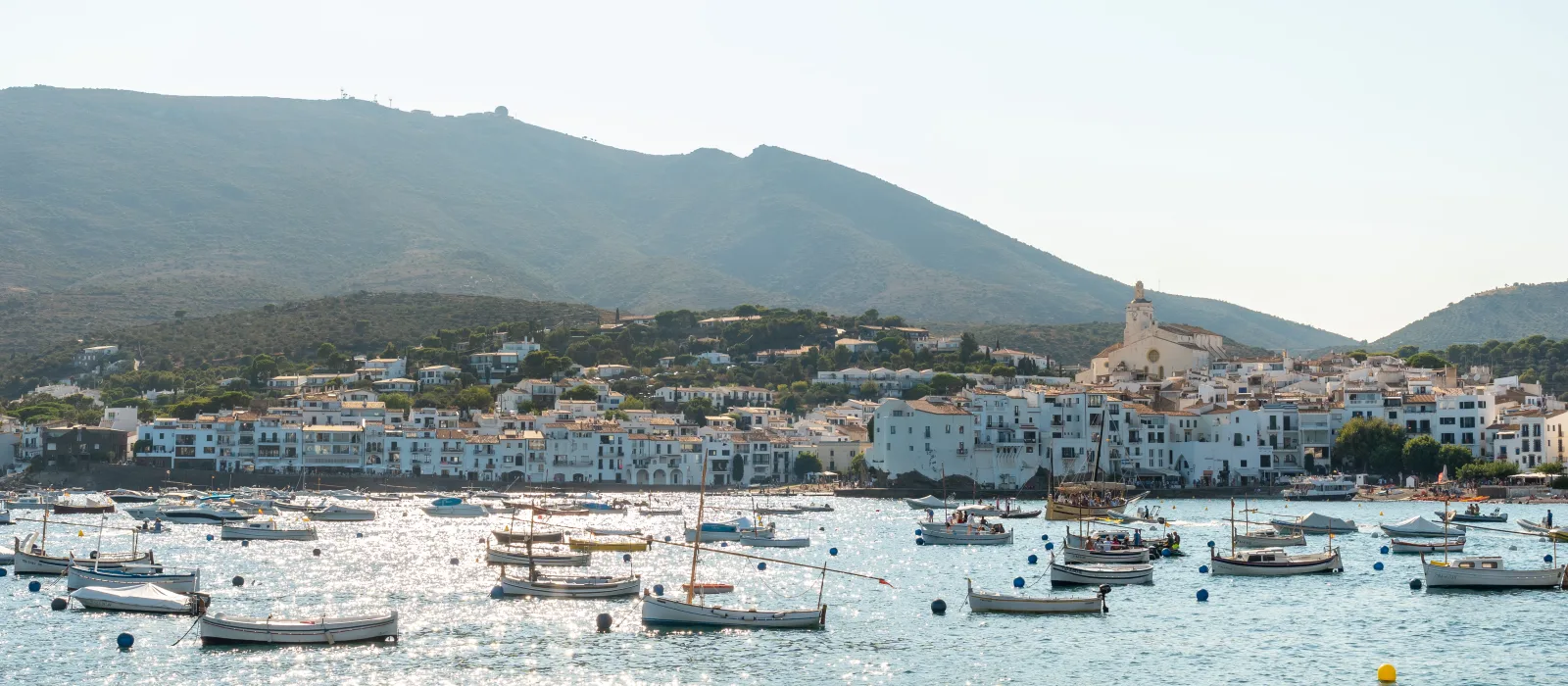
The adventure begins in the port of Cadaqués, arguably the most iconic village on the Costa Brava. As we cast off, the scene is unforgettable: whitewashed houses huddle around the dome of the church of Santa Maria, forming a white amphitheatre that contrasts with the deep blue of the Mediterranean. As we head north, the outline of the village shrinks on the horizon, but its light remains. It is the same light that captivated Salvador Dalí, Pablo Picasso and so many other artists who made this corner their refuge. We sail with the bow pointed towards Port Lligat, the heart of Dalí’s universe.
2. Port Lligat: The genius’s hideaway
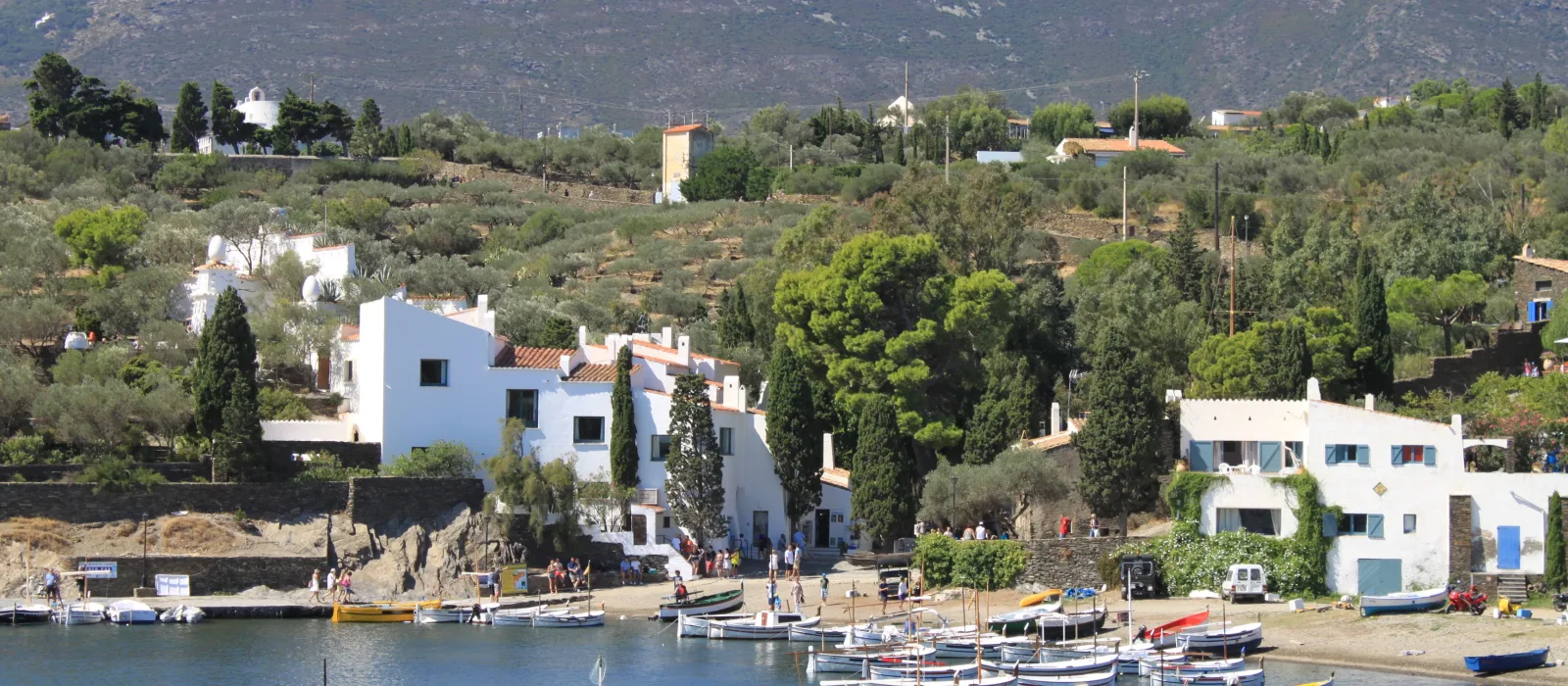
Just a few minutes’ sailing away, the unmistakable silhouette of Port Lligat appears before us. This small fishing cove is world-famous for housing Salvador Dalí’s house-studio, that labyrinth of white buildings that seems to merge with the rocks as if it were part of the landscape. From the sea, the perspective is unique and privileged: we can admire the seafront façade of the surrealist genius’s home, with its characteristic white eggs crowning the walls and those impossible structures that so fascinated the artist.
Port Lligat is not just Dalí’s house; it is also a small fishermen’s harbour that has managed to retain its authentic air, the very same that captivated Dalí and Gala when they decided to settle here. The calm waters of the cove invite a brief pause, although it is advisable to continue the route and save the visit on land for another day. From the sea, the whole ensemble takes on an almost magical dimension, as if Dalí himself had sculpted the rocks so that his home would be the natural extension of this unique landscape.
 Wikimedia Commons (velomartinez)
3. Cala Caials: The cliffs viewpoint
We leave Port Lligat behind and continue skirting the coast northwards. We soon arrive at Cala Caials, an obligatory waypoint that, more than a cove for anchoring, is a privileged viewpoint over the imposing geology of Cap de Creus. Here, black slate cliffs plunge sheer down into a sea of cobalt blue so intense it almost hurts the eye.
Sailing in front of Cala Caials is a spectacle in itself. The whimsical shapes of the rocks, sculpted over millennia by the relentless tramuntana wind, create an almost lunar landscape emerging from the Mediterranean. It is the perfect place to feel the full force of nature and to understand why this national park is one of the most unique spaces along the entire Spanish coastline. We recommend slowing down and simply drifting, silently contemplating this geological theatre.
Beneath its waters, however, lies a secret: the remains of the Llanishen, an English merchant steamer torpedoed in 1917 during the First World War. The wreck, which ran aground and finally sank off this cove, lies today between 7 and 10 metres deep, barely recognisable, covered in marine life and scattered across the seabed. Its iron structure, colonised by gorgonians and coral, has become an artificial reef where moray eels, octopus and large scorpionfish find shelter, offering snorkelling and diving enthusiasts a true underwater museum accessible directly from the shore.
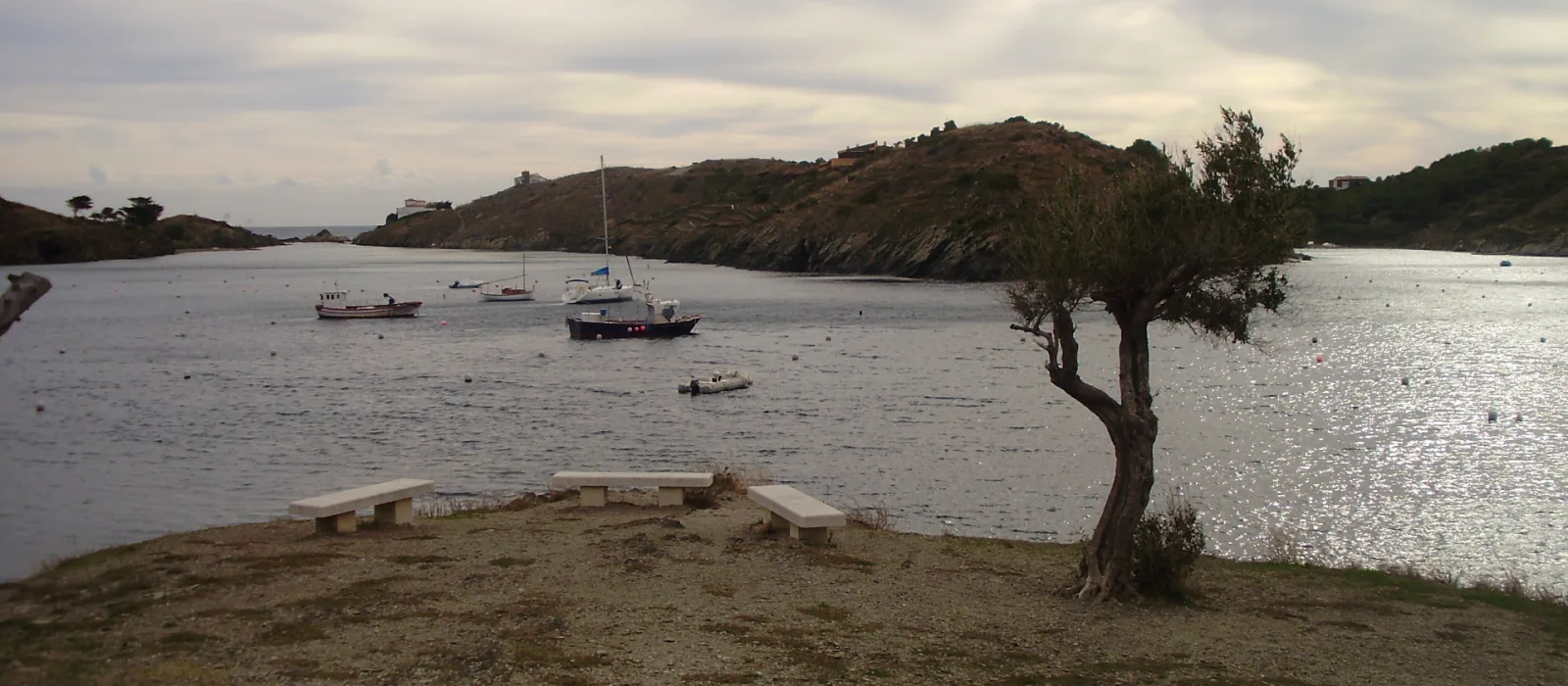 Wikimedia Commons autor: klimmanet
4. Cala Guillola: The antechamber of secrets
Closing the circle of this magical route, although on our itinerary we will visit it on the way back, we now make a first stop at Cala Guillola. Very close to the urban centre of Cadaqués, yet still preserving that wild and sheltered feel, it is a mixed cove of coarse sand and stones that offers excellent water quality. It is one of the usual stops on boat tours due to its easy access and its discreet yet captivating beauty.
Its crystal-clear waters and peaceful surroundings make it an ideal spot for a first swim or to whet the appetite before venturing into the wilder coves that await us further north. From here, the coast becomes more rugged and the landscape more untamed, signalling that we are about to enter the heart of the Natural Park.
5. Cala Bona: The fishermen’s secret
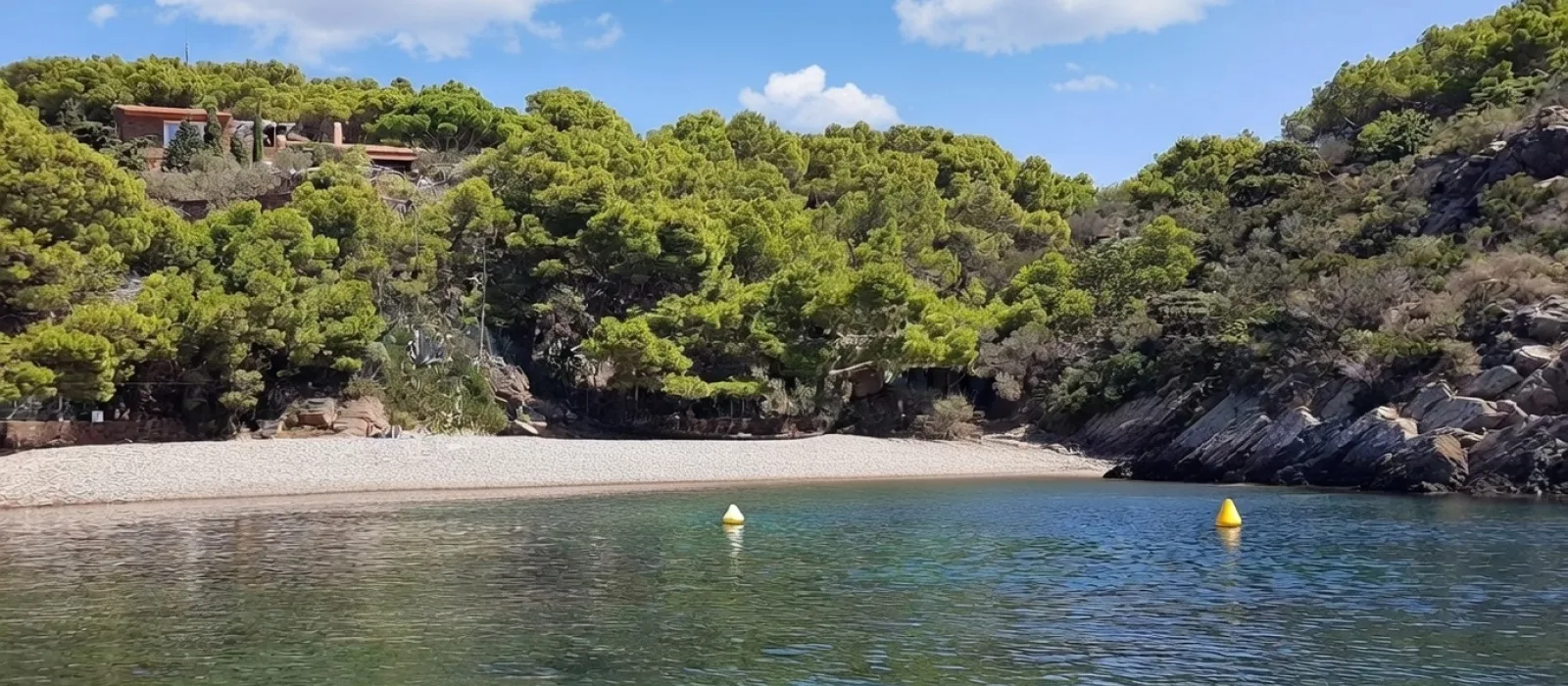
Heading decisively northwards, almost in the very heart of the cape, we find Cala Bona. Its name, which means “good cove”, comes from the fact that it used to be highly regarded by fishermen, as it was a place where catches were especially abundant. In reality, it is not a single beach but a group of three small coves wedged between the rocks. The largest lies at the far end, facing south, and is 22 metres long and 10 metres wide, made up of gravel and pebbles.
It is common to find dried posidonia washed up on its shores, a clear sign that we are in a perfectly preserved and healthy marine ecosystem. Cala Bona is also a place where nudism is practised in complete normality. Seen from the sea, its rugged beauty and crystal-clear waters make it a must-stop. It is one of the coves where excursions usually anchor so that visitors can enjoy snorkelling and tranquillity, although if we are lucky enough to visit it on our own boat, we will probably enjoy much more privacy.
6. Cala Jugadora: A natural aquarium
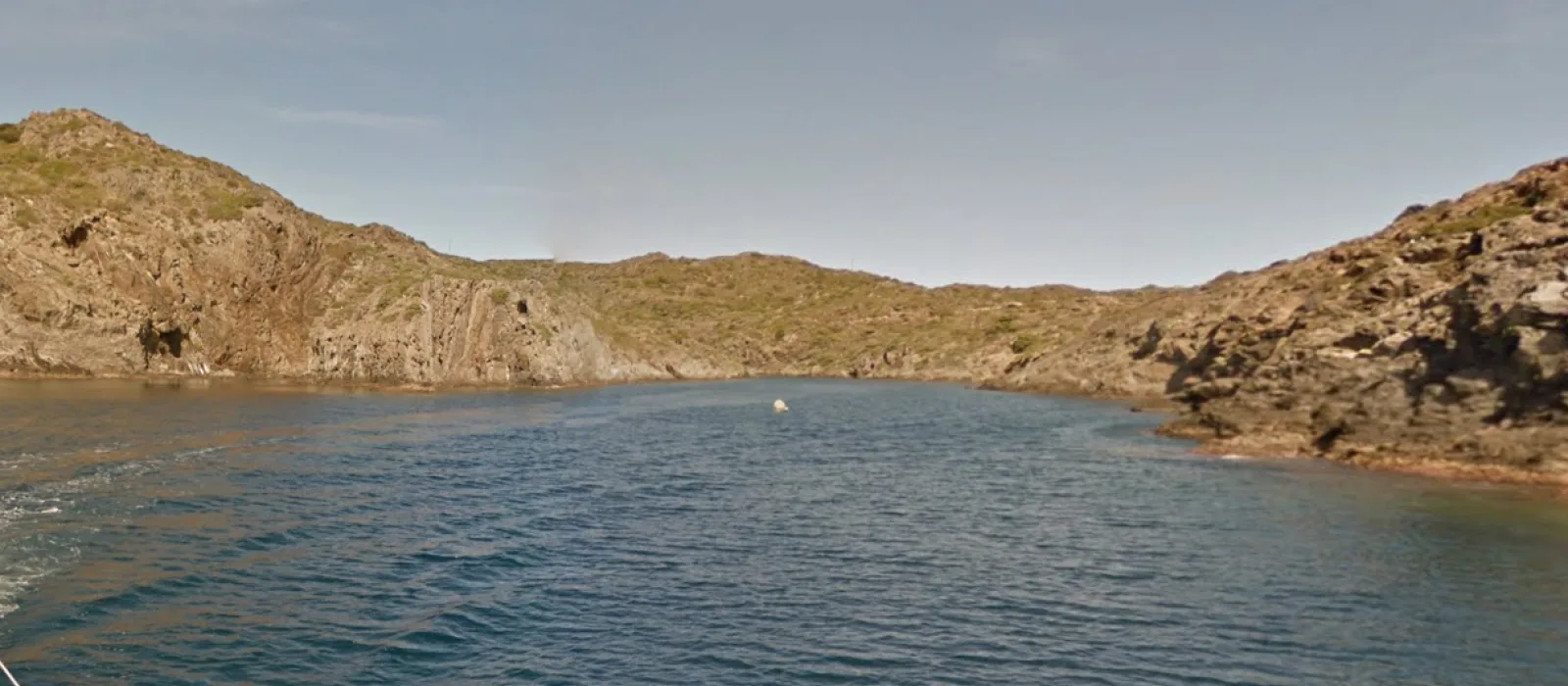
Following the coast northwards, we come across Cala Jugadora, a tiny paradise barely fifteen metres long, sheltered by imposing rock formations. Access by land involves a demanding hike, but arriving by boat is a real privilege. Here, nature is shown at its finest. The water is so transparent that, without needing to venture far from the boat, we can discover a vibrant underwater ecosystem.
The meadows of Posidonia oceanica, the true lungs of the Mediterranean, harbour starfish, shoals of seabream and, if we are lucky, we may see a small moray eel peeking out from between the rocks. The waters of this cove also hold stories of shipwrecks, such as that of the French steamer Tregastel, which rests on its seabed. It is undoubtedly the perfect place for an unforgettable snorkelling session and to connect with the biodiversity that makes Cap de Creus a first-rate marine sanctuary.
7. Cala Fredosa: Absolute calm
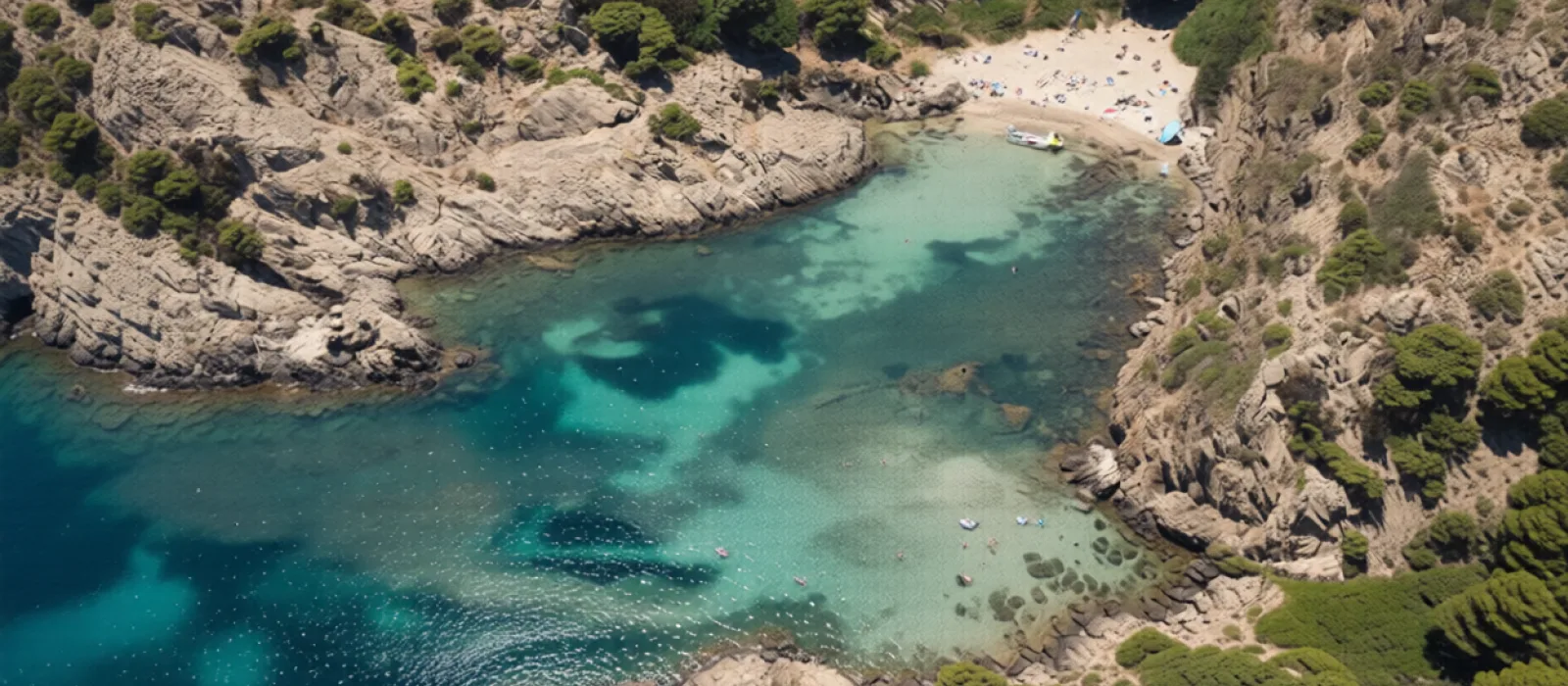
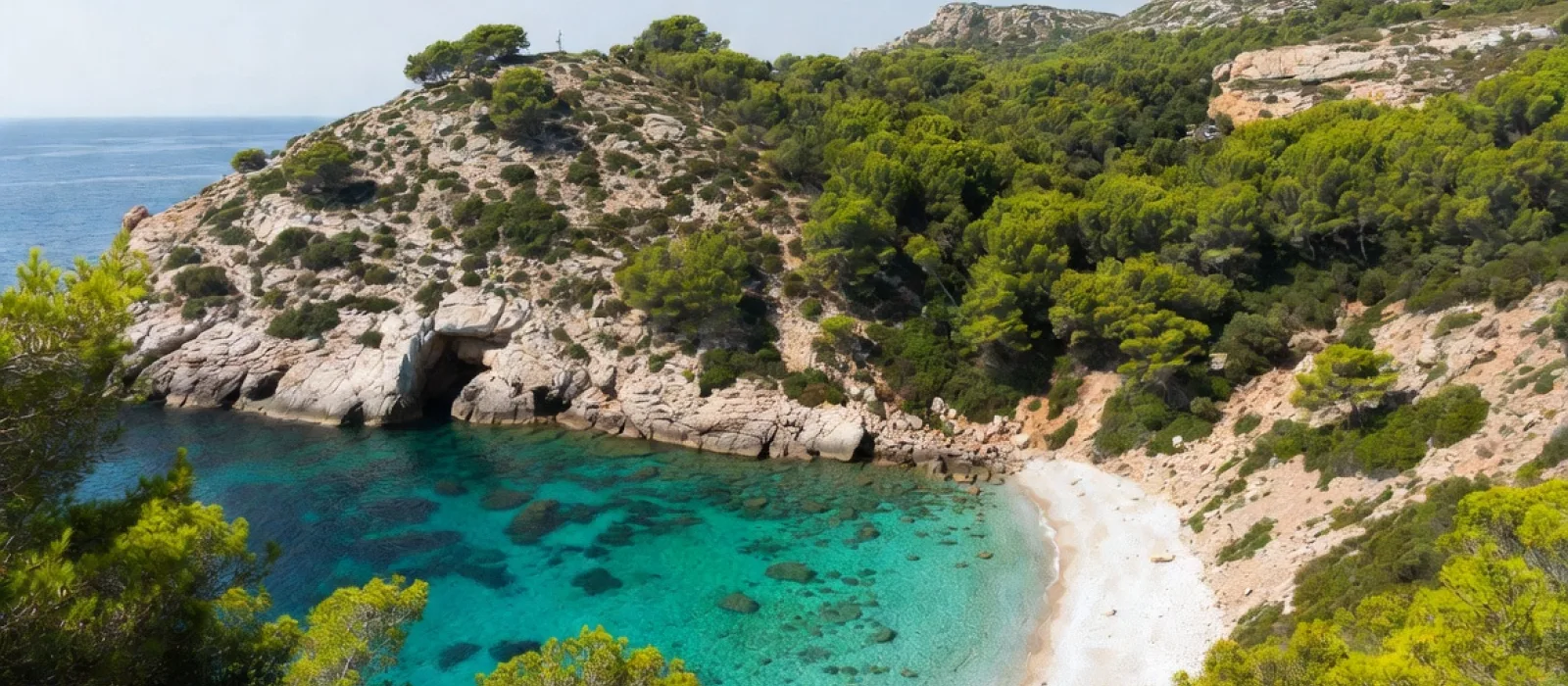
Among the most emblematic coves in the park is Cala Fredosa. Intimate in feel and with serene waters, it is another of those coves that only fully reveals itself to those who arrive from the sea. Its seabed, a combination of sand and rocks, makes it a calm and safe anchorage. It is the ideal place to switch off the engine, let yourself be rocked by the swell and simply take in the majesty of the Natural Park.
Its surprisingly clear waters allow you to observe the seabed with hardly any effort. It is also a place steeped in history: local fishermen knew these waters well, and legends tell of wandering shadows appearing at night to sailors in these remote inlets. By day, however, Cala Fredosa is all light and tranquillity, a haven of peace where time seems to have stood still.
8. Cala Portaló: Absolute exclusivity
If there is one cove that justifies hiring a boat all by itself, it is Cala Portaló. Totally cut off by land due to the cape’s abrupt geology, it is only accessible by sea. Reaching it is like discovering a well-kept secret, a treasure that only a lucky few can enjoy.
It is a cove of deep, crystal-clear waters, where the sun strikes hard on the black slate rocks, creating a spectacular colour contrast. Because there is no easy access, it is often almost empty, offering a sense of exclusivity and peace that is hard to match anywhere else along the coast. Its seabeds also hold memories of shipwrecks, such as that of the Douaumont, one of the many vessels that met their end on these indomitable shores. Anchoring here is a true luxury: only the sound of the water, the flight of seagulls and the immensity of Cap de Creus as your sole witness.
9. Cala Cullaró and the Cap de Creus lighthouse: The end of the world
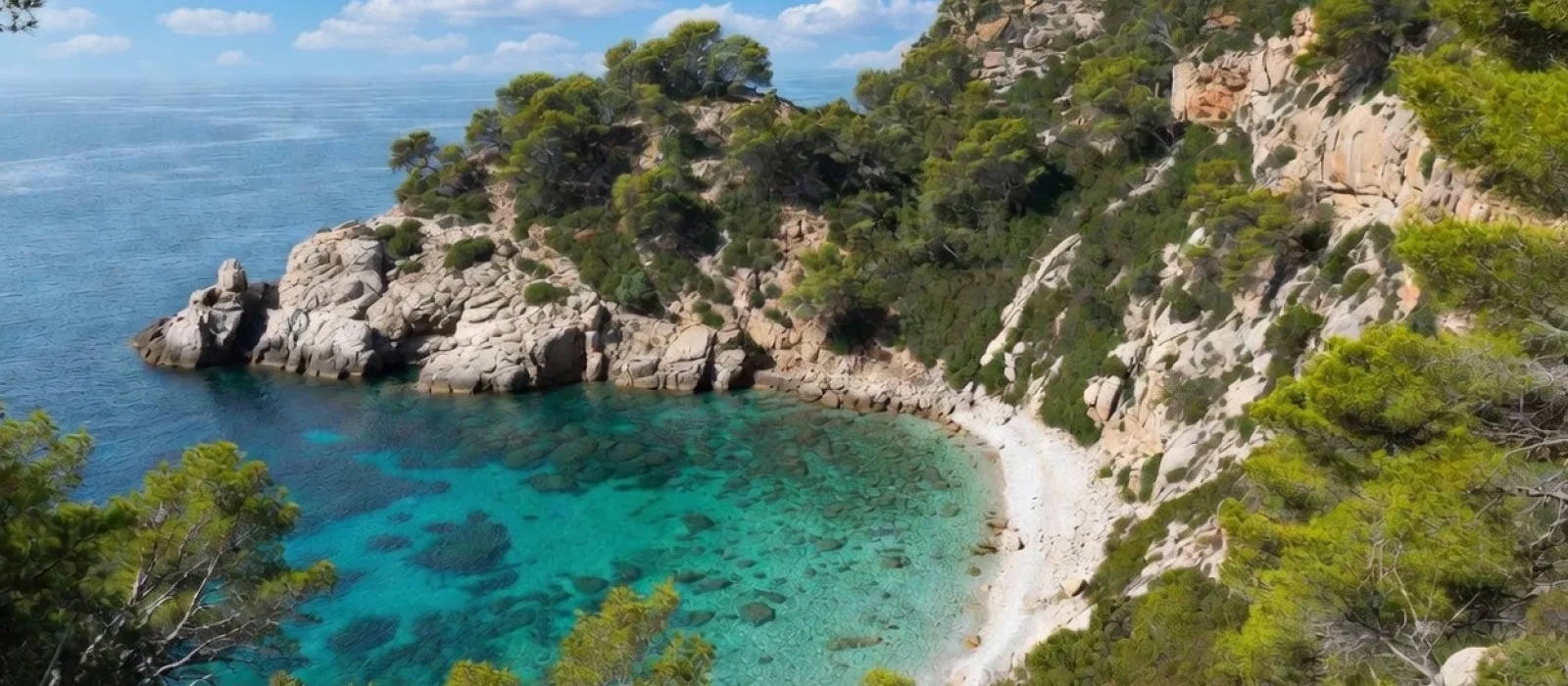
We now enter the most emblematic and wildest area of the entire route. Cala Cullaró lies in the vicinity of the Cap de Creus lighthouse, that geographic point marking the easternmost tip of the entire Iberian Peninsula. Here the landscape reaches overwhelming levels of beauty. Metamorphic rocks, twisted by the tramuntana over millions of years, create sculptural forms emerging from a hypnotic blue sea.
The lighthouse, a silent witness to countless crossings and shipwrecks, watches from above over this otherworldly landscape. Sailing past Cala Cullaró is seeing Cap de Creus in its purest state: the feeling of being at the end of the world is inevitable. The waters here are deep and of absolute clarity, and the light, especially in the early morning or at sunset, takes on an almost unreal quality. This is where the land ends and the Mediterranean opens endlessly eastwards.
10. Illa Encalladora, Illa Massa d'Oro and the Cova de S'Infern: The magical labyrinth
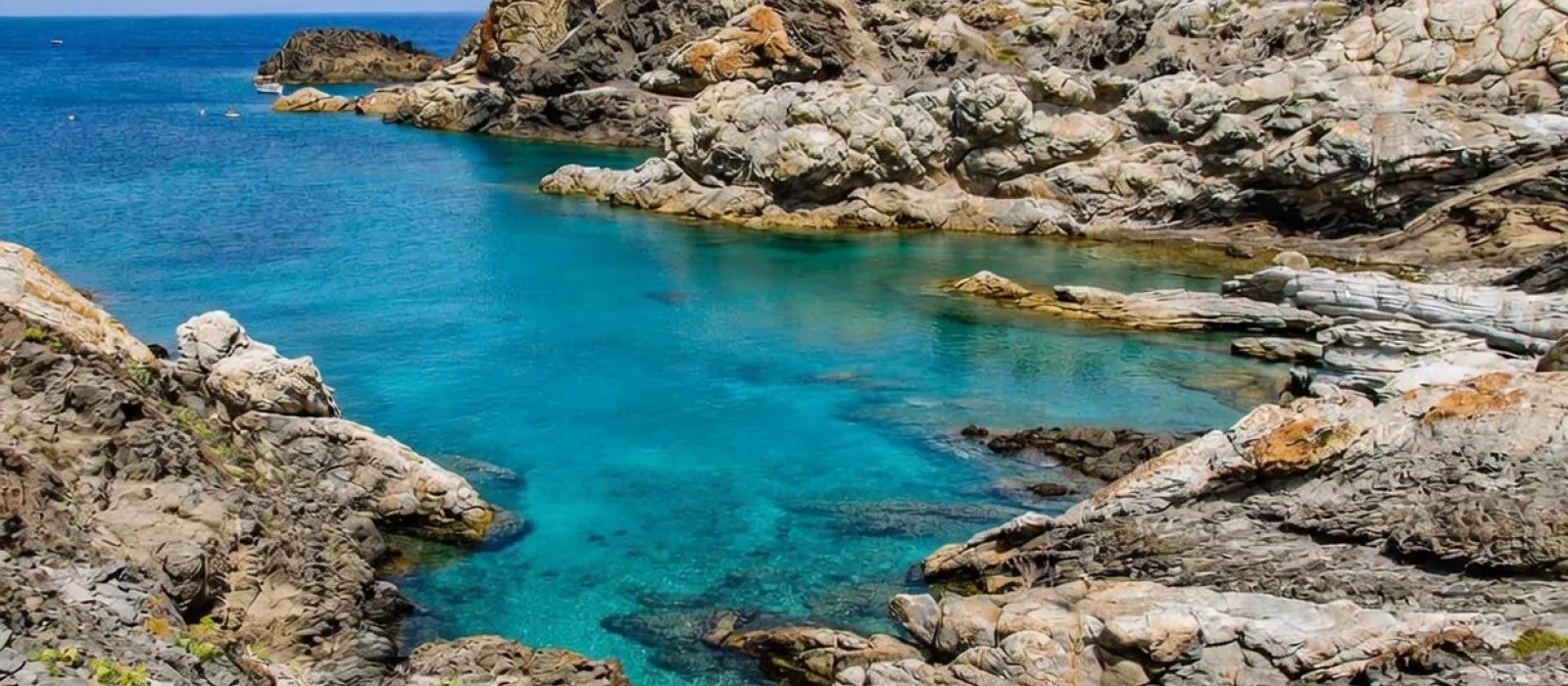
We reach the most exciting and most photographed moment of the entire crossing: sailing through the channel that separates Illa Encalladora from the mainland coast “Pas de s’Encalladora”. This small archipelago, formed by Illa Encalladora and Illa Massa d’Oros, rises imposingly opposite the cape. Sailing between these islets and the cliffs is an almost mystical experience.
The rock formations, sculpted by centuries of tramuntana, create a Dantean and fascinating landscape in equal measure. The channel, although navigable with caution and always in calm seas, offers spectacular views and the chance to completely circle these islets, discovering small caves and natural arches that can only be reached from the water.
Special mention must go to the Cova de S’Infern, a striking sea cave located in this area. Entering it with a small boat or even by kayak is an unforgettable experience. The light filtering through the openings creates plays of shadows and reflections on the water that more than justify its evocative name.
It is important to remember that we are sailing through a protected area. The waters surrounding Illa Encalladora are rich in biodiversity, and the posidonia meadows carpeting its seabeds are essential to the health of the Mediterranean. Sailing respectfully, without anchoring in sensitive areas, is the only way to preserve this paradise.
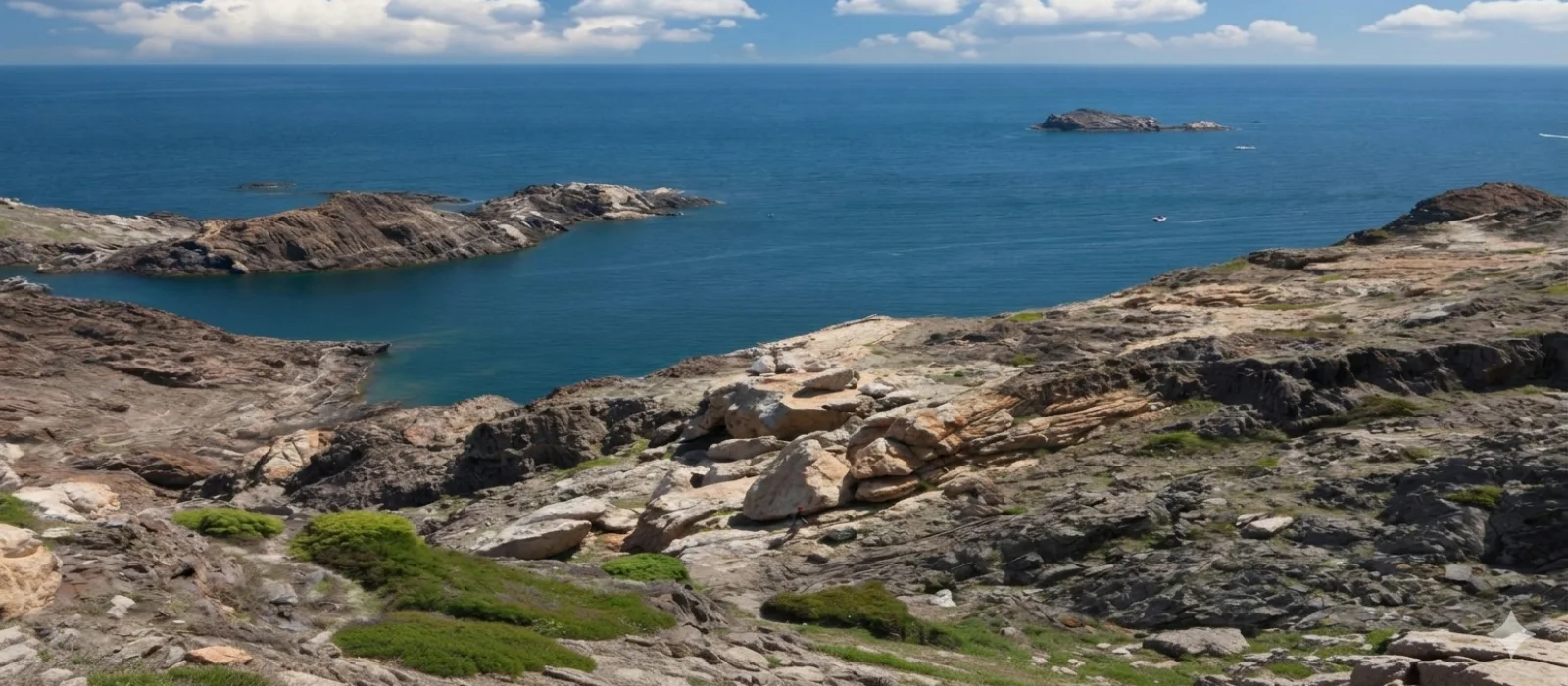
And then, when we round the last headland and position ourselves opposite Illa Massa d’Oros, we become aware of something extraordinary: we are at the easternmost point of the entire Iberian Peninsula. This small archipelago, battered by the winds and bathed in crystal-clear waters, is the first place in mainland Spain where the sun rises each day. Switching off the engine here, floating in silence and contemplating the endless horizon is a moment of deep connection with nature and with history. The ancient seafarers, fishermen, smugglers and artists who frequented these shores surely felt the same emotion in the face of this unique landscape.
11. Return to Cadaqués: The finishing touch
We close the circle and set course back to Cadaqués. The sun begins to sink, bathing the white façades of the village in golden and pink hues. We moor in the harbour with the feeling of having experienced something special, of having discovered the best-kept secrets of the Mediterranean. Cobbled streets await us, a table with a view and a good suquet de peix to celebrate the crossing. Because the real luxury on the Costa Brava is not in its hotels, but in the freedom of discovering, from the sea, these dreamlike corners.
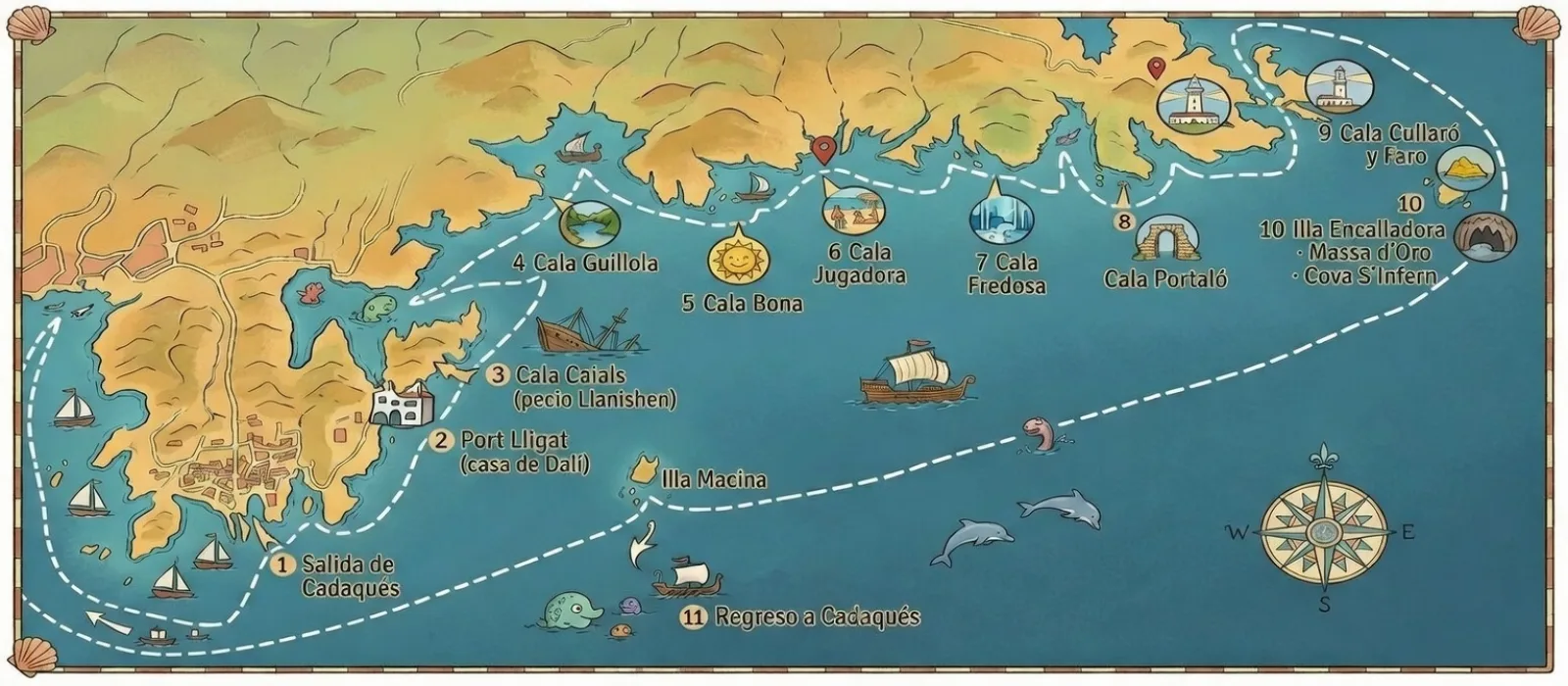
Summary itinerary
1 Departure from Cadaqués
2 Port Lligat (Dalí’s house)
3 Cala Caials (Llanishen wreck)
4 Cala Guillola
5 Cala Bona
6 Cala Jugadora
7 Cala Fredosa
8 Cala Portaló
9 Cala Cullaró and lighthouse
10 Illa Encalladora · Massa d'Oro · Cova S'Infern
11 Return to Cadaqués
Roadmap: “Slow Sailing”
Cruising speed: 4 knots (approx. 7.5 km/h) — Hugging the coast, taking in every nook and cranny.
⏱️ Analysis of your Day at Sea
If you leave Cadaqués at 10:00 in the morning, this would be your approximate timetable:
Tips for “Close-Quarter Navigation”
Watch your draught
When you are hugging the coast (“looking slowly”), remember that Cap de Creus has many “secas” (rocks that do not break the surface). Keep one eye on the depth sounder and the other on the colour of the water (brown/black = rock nearby).
The Cova de S'Infern
At 4 knots you have the perfect speed to approach the entrance if the sea is like a mirror. Get your camera ready!
The Encalladora Channel
It is narrow. At 4 knots you will enjoy it far more, seeing how the rock walls are almost within touching distance.
Sail with respect
For sea lovers, following this route is a dream. But it is crucial to do so responsibly. Cap de Creus is a protected natural area. We must avoid anchoring over posidonia meadows, using ecological buoys where available or ensuring the anchor bites into sandy seabed. Taking all our rubbish with us and not disturbing marine life is the only way for these secret coves to remain so for many years to come.